


Malaysia has taken a bold step towards advancing its semiconductor industry with a groundbreaking agreement with Arm Holdings Plc. This move aims to propel the nation beyond chip assembly and into high-value semiconductor design and production. The agreement aligns with the country’s ambition to establish itself as a major player in the global semiconductor market.

Understanding System on a Chip (SoC)
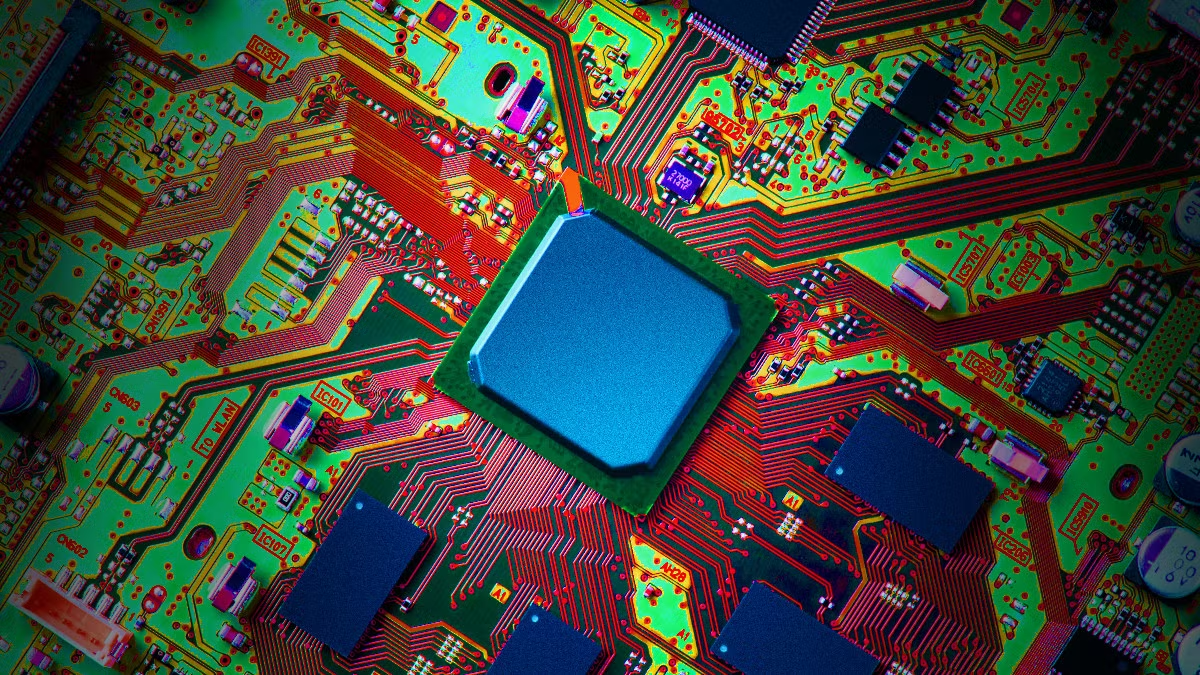
System on a Chip (SoC) is an advanced semiconductor technology that integrates multiple computing components—such as the central processing unit (CPU), graphics processing unit (GPU), memory, and input/output controllers—into a single chip. This technology is the backbone of modern electronic devices, from smartphones and tablets to smart appliances and autonomous vehicles.
As global demand for compact, energy-efficient, and high-performance electronics grows, SoC technology continues to evolve. The future of SoC development is being driven by key advancements including AI integration, edge computing, enhanced energy efficiency, stronger cybersecurity features, and cutting-edge manufacturing techniques like 3nm and beyond.
The Significance of Malaysia’s Deal with Arm Holdings
The Malaysian government has secured a RM1.11 billion (US$250 million) agreement with UK-based Arm Holdings over the next decade. This partnership will provide Malaysia with semiconductor-related licenses and technological expertise, significantly accelerating its transition from a chip packaging hub to a center for chip design and development. The government has set ambitious goals, targeting RM1.2 trillion (US$270 billion) in semiconductor exports by 2030 and the creation of at least ten chip companies with a combined annual revenue of US$20 billion.
Economy Minister Datuk Seri Rafizi Ramli highlighted that the agreement is part of a broader strategy to build a robust semiconductor ecosystem in Malaysia. “We have always wanted to move from the back-end — which is on testing and assembly — to the front-end,” he stated, emphasizing the government’s commitment to technological advancement.
Key Benefits for Malaysia
1. Strengthening the Semiconductor Industry
Malaysia currently plays a crucial role in semiconductor packaging, hosting major global firms such as Intel, GlobalFoundries, and Infineon Technologies. The collaboration with Arm will allow Malaysia to expand its capabilities into chip design, positioning itself further up the semiconductor value chain.
2. Accelerating Talent Development
Developing a strong workforce is a major challenge in the semiconductor industry. Through this partnership, Malaysian engineers and researchers will gain access to state-of-the-art chip design knowledge. This will help build expertise in AI, IoT, and high-performance computing, creating new employment opportunities for Malaysian graduates in engineering and software development.
3. Boosting Economic Growth
The semiconductor industry is a key driver of Malaysia’s economy. The government anticipates that the growth of local chip companies will contribute an additional 1% to the nation’s GDP. By fostering a vibrant SoC industry, Malaysia is setting itself up for sustainable economic expansion.
4. Enhancing Technological Independence
At present, Malaysia relies heavily on imported semiconductors. Investing in local SoC development will reduce this dependence, ensuring greater technological sovereignty in critical sectors such as defense, telecommunications, and artificial intelligence.
5. Attracting Foreign Investments and Innovation
A well-developed SoC ecosystem will make Malaysia an attractive destination for multinational tech companies looking to establish design and R&D centers. This will drive further innovation and encourage the growth of homegrown technology startups in the semiconductor sector.
6. Mitigating Geopolitical and Supply Chain Risks
Global semiconductor supply chains have been disrupted by trade tensions and geopolitical instability. By developing its own chip technology, Malaysia can insulate itself from external shocks and secure a stable semiconductor supply for its industries.

A Strategic Move for the Future
Malaysia’s agreement with Arm Holdings marks a significant milestone in its journey to becoming a semiconductor powerhouse. The government’s commitment to moving up the value chain—from semiconductor packaging to chip design—demonstrates a clear vision for the country’s technological and economic future.
As Malaysia accelerates its semiconductor ambitions, this strategic move is expected to drive job creation, attract global investments, and position the nation as a key player in the evolving global semiconductor landscape.


More Stories
Sawah Padi Kering dan Krisis Diesel: Ancaman Berganda kepada Petani
Antara Zuhud dan Kesesatan, Iktibar Penting Dari Tipu Daya Syaitan Dalam Memahami Tauhid
Sambutan 50 Tahun Persatuan Pegawai Akademik UPM: Lima Dekad Berbakti dan Berilmu